Showing posts with label July 2011. Show all posts

Friday, March 2, 2012

The Farm (Summertown, Tennessee)

For over 40 years I've followed the news of The Farm, an intentional community based on non-violence and respect for the Earth. The Farm is located in Lewis County, Tennessee, near the small town of Summertown, and I never imagined I would someday be in a situation that would put me within striking distance of this community. (One of the greatest perks of this lifestyle, by the way, is finding yourself close to places you've always wanted to visit!) Founded in 1971 by Stephen Gaskin and 320 San Francisco hippies, The Farm is well known amongst hippies and other members of similar subcultures as well as by many vegetarians. The Farm has gone through many transitions over the years, with an evolving philosophy and fluctuating population. At its peak, the Farm claimed somewhere between 1200 and 1600 members living on the main property; today there are approximately 175 residents.
The Farm has been involved in many enterprises, with its own electrical crew, composting crew, farming crew, construction & demolition crew, clinic, firewood crew, alternative energy crew, motor pool, laundromat, tofu plant, bakery, school and ambulance service. It established The Book Publishing Company, which published the works of the Gaskins and other Farm members. The Farm's midwifery school and Ina May Gaskin's seminal book "Spiritual Midwifery" are well-known throughout the world for their emphasis on maternal and newborn compassion, safety and success rates.

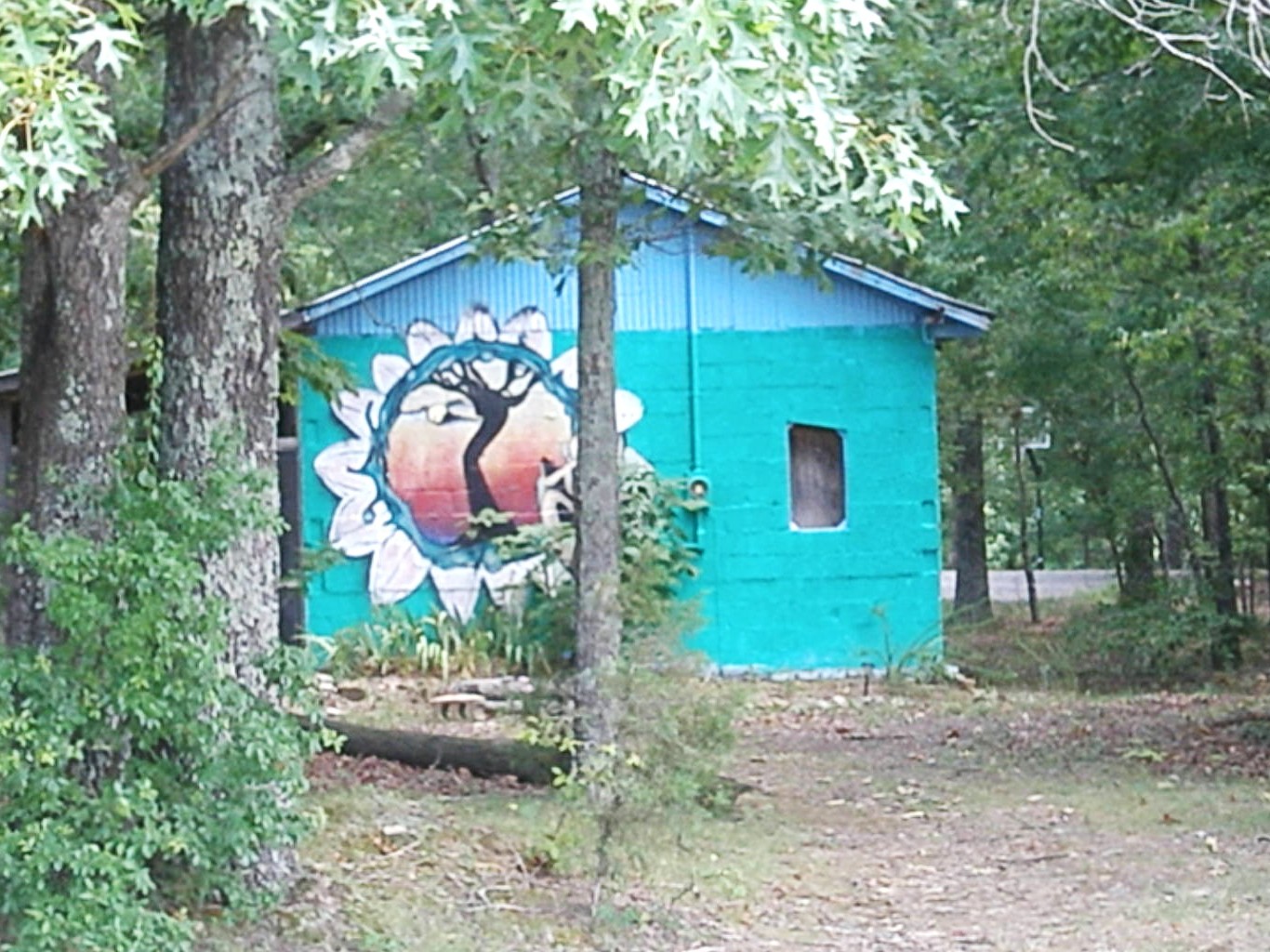
Dan and I spent a day in July 2011 taking a self-guided tour of The Farm, visiting The Farm Store, the Visitor Center (where we bought a tie-dye T-shirt, a hat, and a vegan Chinese cookbook), having a picnic lunch under the dome, and spending some time inside the mystical Wholeo (a geodesic dome fourteen feet in diameter and seven feet tall, covered with curved stained glass panels). This was truly a day well spent, allowing me to accomplish one of the highest priority items on my bucket list.

There is so much more to share about The Farm, but it would require a whole separate blog on that alone, so instead I will include two links that will provide more in-depth information if you are interested.




Wednesday, February 29, 2012

The Hermitage

While in Nashville, we took the opportunity to visit The Hermitage, a former cotton plantation and now historical museum, once owned by Andrew Jackson, the 7th president of the United States. We started off watching a film about Andrew Jackson, followed by a guided tour through the beautifully restored Ante-bellum mansion that was his home, and a lengthy stroll on the manicured grounds. Initially Jackson operated his cotton farm with nine enslaved African Americans, but this number gradually grew to 44 by 1820. Jackson rapidly converted the farm into a prosperous 1,000-acre plantation and supervised the construction of many outbuildings, including a distillery, dairy, carriage shelter, cotton gin and press, and slave cabins. At the peak of operation, Jackson had more than 100 enslaved men, women, and children working in the fields. Additional enslaved families provided for the domestic necessities of the Jackson Family, such as cooking, cleaning, gardening, driving, and a multitude of other daily tasks. Although The Hermitage doesn't try to hide these realities, it is none-the-less hard for me to accept that slave labor, owning slaves, was a common occurrence during these times. Pictures weren't allowed inside the mansion, but we were able to take as many as we wanted outside, on the grounds, and of the former slaves quarters.


Nashville, Tennessee

We wrapped up July 2011 with a capital visit to Nashville, Tennessee. The State Capitol building sets atop a high hill in downtown Nashville, and offers spectacular views of the surrounding area. It is one of only eleven state capitols (along with those of Deleware, Hawaii, Louisiana, New Mexico, New York, North Dakota, Ohio, Oregon, Alaska, and Virginia) that does not have a dome. Designed by architect William Strickland, construction on the Capitol Building began in 1844 and was completed in 1859. Strickland died during the construction in 1854 and is buried within its walls.


Sunday, February 26, 2012

Mammoth Cave, Kentucky

Visiting the National Parks is one of our objectives as we travel the country, and while in Kentucky we had the exciting opportunity to visit Mammoth Cave National Park. Located in south central Kentucky near the Green River, Mammoth Cave is the world's longest known cave system, with more than 390 miles explored (thus it's name, Mammoth - not for the woolly mammoth). Some notable features of the cave, such as Grand Avenue, Frozen Niagara, and Fat Man's Misery, can be seen on lighted tours ranging from one to six hours in length. Two tours, lit only by visitor-carried paraffin lamps, are popular alternatives to the electric-lit routes. Several "wild" tours venture away from the developed parts of the cave into muddy crawls and dusty tunnels. We opted to take two of the tamer electrically lit tours, which gave us a good feel for the cave structure and the chance to walk deep into the heart of the labyrinth. The walk from the Visitors Center to the cave entrance (literally a steel door cut into the side of a hill) was lush and green, and the weather outside was thick, humid, and oppressively warm.  It was sweet relief going down into cool stony cavern, where the temperatures were in the mid 50's, and kind of shocking to climb back out into the heat after spending several hours underground. Although Mammoth Cave didn't compare in absolute beauty to Carlsbad Caverns, it was still a very worthy exploration.


Saturday, February 25, 2012

Frankfurt, Kentucky

The State House in Frankfurt, Kentucky sits atop a hill, and the July day we chose to visit was very hot and very humid.  It was quite an effort climbing those steps to reach the cool interior of the capitol. From the outside, the resemblance to the capitol building in Washington D.C. is quite striking, not only with the similar dome structure, but also the way the two side wings spread so far out from the main entrance. Like many capitols, the one in Frankfurt is situated near a river, in this case, the Kentucky River. The Capitol Building is influenced from important places of history and architecture from all over the world, including France, Greece, and Italy. Marble stairways, banisters, and balustrades at either end imitate the staircases of the Grand Opera House in Paris. The capitol rotunda, which is topped by a massive 190' dome is copied from the one over Napoleon's tomb in the Hotel des Invalides in Paris.  On the nearby grounds surrounding the capitol complex is a huge floral clock, that actually keeps real time!